Aurora Council Rewrites Metal Roof Rules, Unveils 2027 Budget and Starts Fire Levy Renewal
One Word Split the Vote on Metal Roofs
Council Meeting | By Julie D'Aloiso | November 10, 2026
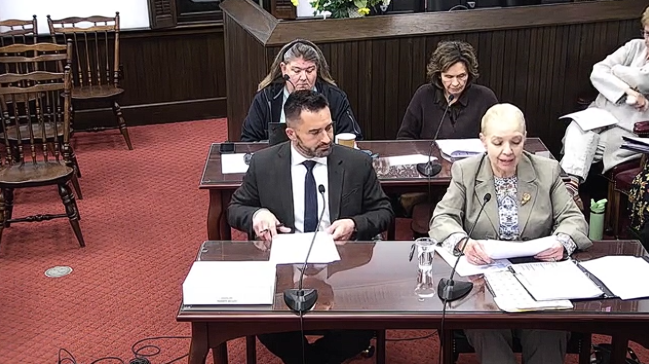
Aurora City Council spent much of Monday, Nov. 9, debating a single word. Members voted 6 to 3 to remove “preferred” locations from new metal roof guidelines before adopting the rules. The Committee of the Whole met first. Mayor Ann Womer Benjamin presented her proposed 2027 budget there. Council also started the process to renew the city’s fire paramedic levy, and the rezoning hearing set at the last meeting was moved to Nov. 23. Metal Roof Guidelines Pass After Long Review Council adopted Ordinance 2026-148, which updates the Architectural Board of Review residential guidelines for metal roofs. The final vote was 8 to 1, with Council Member Sarah Grdina Gilmore voting no. An emergency clause puts the guidelines in place before winter. An ad hoc committee studied the proposal first. Council Member John Kudley Jr. chaired it, joined by Grdina Gilmore, John Seitz and Ralph Ware. Planning, Zoning and Building Director Denise Januska and Law Director Dean DePiero served as advisors. Clerk of Council Marie Lawrie put together the committee’s materials. They included a history of metal roof approvals from 2020 to 2026 and five metal roof appeals council had decided. The committee met Oct. 26 and Nov. 4. Kudley said the ABR strongly wanted guidelines that gave more clarity. What the New Roof Rules Require Ware moved to replace the Planning Commission version with the committee’s substitute. Under the substitute, metal roofs are permitted when they meet these standards: They fit the home’s architectural style and the immediate neighborhood. They are standing seam or embossed designs that look like shingles, tile or other natural materials. Fasteners are concealed or inconspicuous. Paint and finishes are applied at the factory and installed to manufacturer specifications and the Ohio Building Code. Colors are subtle, matte and neutral shades of black, gray or brown that match the existing roof and the neighborhood. Bright and luminous colors are prohibited. Where a homeowners association exists, the roof needs HOA approval as well as ABR approval. Homes in a landmark district or on the National Register need Landmark Commission approval. The Debate Over “Preferred” The substitute also listed preferred locations for metal roofs. Those were accent roofs, porch additions, rear additions and accessory buildings in back yards. Council Member Brad Duguay moved to strike that section. He said Planning Commission had already sent the proposal back once over those limits. He also said residents had given him a lot of feedback. In his view, the wording would mislead the ABR into thinking council did not want metal roofs on houses. Kudley agreed. He said the word “preferred” opens the door to the subjective opinions the ABR has tried to avoid. He also wanted a united council vote so the ABR knows where members stand, which would cut down on appeals. Seitz backed the change. Council Member Scott Wolf said the section adds ambiguity. He noted that ABR rejections keep landing before council, “which every one of them we approve by the way.” Ware disagreed. He said the preferred language connects back to the original guidelines while still opening the door to metal roofs. Grdina Gilmore said council had come a long way from allowing no metal roofs at all. She had no problem with the word. Womer Benjamin sided with Ware and Grdina Gilmore. “Preferred is just that,” she said. She pointed out that the first line of the change says metal roofs are allowed. DePiero said deleting the section required five votes. It passed 6 to 3, with Grdina Gilmore, Council President George Horvat and Ware voting no. Permit Penalties and Fees Updated Council unanimously adopted Ordinance 2026-149, which updates the ABR penalty section. Members approved it as Planning Commission submitted it. Ordinance 2026-150, which updates the permit fee schedule, was amended and then adopted unanimously. Anyone who starts building, electrical, gas, mechanical or plumbing work without a required permit will pay double fees. The administration can also add a civil fine of up to 10% of the project cost, capped at $5,000. The amendment moved that decision from the planning, zoning and building director to the administration. The administration may still consider the director’s recommendation and the extent of the violation. The fee ordinance also includes a break for lower income owners. Households at or below 175% of the federal poverty guidelines can get 50% off permit fees for repairs, maintenance and safety improvements. They must be enrolled in an energy assistance program and provide utility bills. RELATED ARTICLE Fresh Views of Aurora Park at Geauga Lake | The Aurora Pulse Mayor Unveils the 2027 Budget Womer Benjamin presented the proposed 2027 budget, Ordinance 2026-172, which moves to second reading. She called 2026 a monumental year. She said Phase 1A of Aurora Park at Geauga Lake opened on time and within budget. She also pointed to the FEMA stormwater projec